Most mornings in an American kitchen start the same way: someone half-awake, reaching for coffee before anything else. The machine on the counter decides whether that first cup is something you look forward to or something you just tolerate.
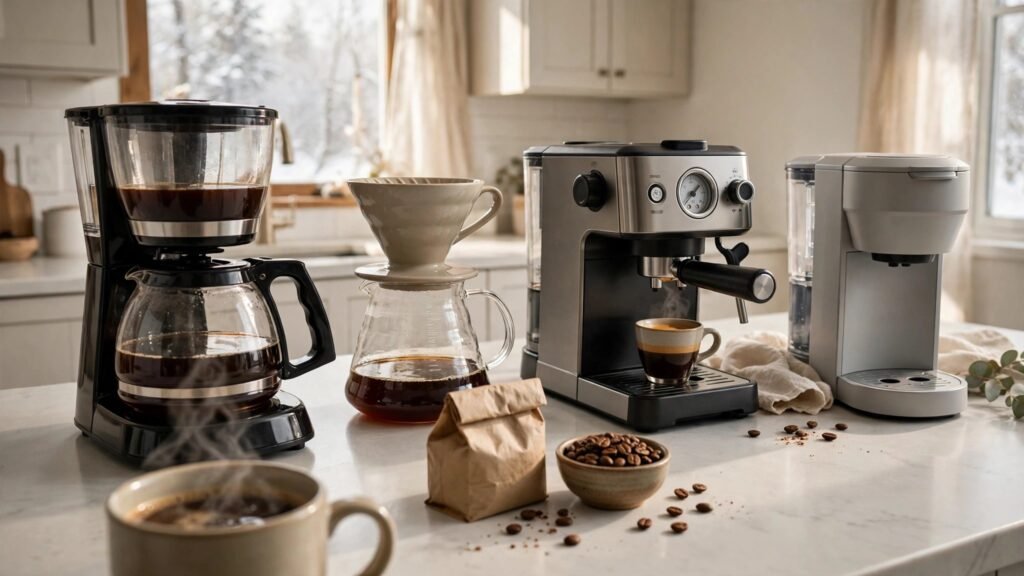
Four types are worth comparing: drip, pour-over, espresso, and single-serve pod machines. Each makes a different cup, asks for a different amount of effort, and suits a different household.
Drip coffee makers: the household workhorse
If two or more people in the house drink coffee, a drip machine is the default for a reason. Fill the tank, add a paper filter and grounds, press a button, and a pot is ready in about ten minutes. Most brew 10 to 12 cups, and many have a programmable timer.
Check the carafe before buying. A glass carafe sits on a hot plate, which keeps coffee warm but can make it taste bitter if it sits there for an hour. A thermal carafe costs a bit more but keeps coffee hot without cooking it.
A drip machine is not for you if you only drink one cup a day — you’ll brew a pot, drink a mug, and pour the rest away. It’s also not the pick if you love experimenting with flavor, since drip machines give you very little to adjust. Typical price range: basic models run about $25 to $60, while well-built thermal-carafe models usually land between $80 and $200.
Pour-over: the most control, the most effort
A pour-over setup is simple: a dripper that sits on a mug or carafe, a paper filter, and a kettle. You pour hot water over the grounds in slow circles, and the coffee drips through.
That simplicity is the point. You control the water temperature, the pour speed, and the grind, so you can pull flavors out of good beans that a drip machine would flatten — the cheapest way to make a genuinely excellent cup at home.
But it is a ritual, and rituals take time. One cup needs about three to four minutes of your attention at the counter. If your mornings are a rush — kids, a commute, a dog that needs walking — that attention is the first thing you’ll skip, and the dripper will end up in a cabinet. Pour-over is also a one-or-two-cup method; making coffee for four guests means brewing in rounds.
A pour-over dripper is a low-cost way to test whether you enjoy hands-on brewing. A good kettle helps a lot here — our electric kettles guide covers what to look for in size, spout control, and safety features.
Typical price range: a dripper and filters cost about $20 to $40 to start, plus a kettle if you don’t already own a suitable one.
Espresso machines: café coffee, café effort
An espresso machine is the only home option that makes a true espresso shot, the base for lattes, cappuccinos, and flat whites. Espresso is stronger, thicker, and more intense than drip coffee, and milk drinks built on it taste like the ones from a café because they are built the same way.
The catch is everything around the shot. You need fresh beans, a grinder that can grind fine enough, and some practice — your first dozen shots will probably be sour, bitter, or both. Espresso machines also take up real counter space and need regular cleaning, the milk frother especially.
This is the right choice if you drink milk-based coffee daily and you’re willing to learn a small skill. It’s the wrong choice if you just want caffeine quickly, if your counter is already crowded, or if you’d rather not add another cleaning routine to your life. Typical price range: decent home machines start around $150 to $300, and models with built-in grinders and better steam wands usually run $400 and up.
Single-serve pod machines: the fastest cup
Pod machines win on one thing: speed. Put in a pod, press a button, and a cup is ready in about a minute. No measuring, no filter, no leftover pot to pour out, and everyone in the house can pick a different flavor.
The trade-offs are cost and taste. Pods cost noticeably more per cup than ground coffee — a daily drinker can spend several times more on coffee over a year than with a drip machine. The coffee itself is good but rarely great, and you can’t adjust much about the brew. There’s also the waste: single-use pods add up, even with recycling programs.
Skip it if you drink four or five cups a day, or if you care about squeezing the best flavor out of specialty beans — but if speed and zero cleanup matter most, it’s hard to beat. Typical price range: machines usually cost $80 to $180, with pods adding roughly 50 cents to a dollar per cup on top.
How to choose: five honest questions
How many cups a day, total, for the whole household? One or two points to pour-over or single-serve; three or more points to drip. How many minutes will you actually spend? Under one minute means single-serve; five minutes opens up pour-over or espresso. Do you drink milk-based coffee? If lattes are your daily order, only an espresso machine does them properly at home. How much counter space do you really have? Measure it. And what does a cup cost you over a year? A cheap machine with expensive pods can cost more in twelve months than a pricier machine that uses ground coffee.
If you can’t decide between two types, pick the one you’ll actually use on a tired Tuesday morning. The best coffee maker is the one that gets used, not the one with the best reviews.
Mistakes people make
The most common one is buying for a fantasy version of your mornings. A pour-over setup for someone who snoozes three alarms, or an espresso machine for someone who hates cleaning, will gather dust. Buy for your real routine.
The second is ignoring cleaning. Every coffee maker needs regular descaling — mineral buildup from tap water slows brewing and makes coffee taste flat or stale, and hard-water areas need it more often.
The third is the wrong grind. Drip machines want a medium grind, pour-over wants medium-fine, and espresso wants fine. Using one grind for everything is the fastest way to get weak or bitter coffee out of a good machine. And check your mug height: travel mugs and tall cups don’t fit under every machine.
Keeping it simple
A coffee maker is one of the few kitchen gadgets you will use every single day. Match the machine to how you actually live: how much you drink, how much time you have, and how much effort you enjoy.
Easiest mornings: a drip machine with a timer or a pod machine. Best-tasting cup for the money: pour-over. Daily lattes: an espresso machine earns its counter space.
Whatever you pick, good beans and clean water will do more for your cup than any feature on the box. Start there, choose the machine that fits your mornings, and let the coffee be the easy part of the day. The same thinking helps across the kitchen — if your mornings are rushed, our weeknight meal prep gadgets guide covers tools that cut the same kind of daily friction from dinner.
🛒 Shop This Guide – Buy on Amazon
Affiliate Disclosure: Trend Trolley is a participant in the Amazon Services LLC Associates Program. If you buy through a link on this page, we may earn a small commission at no extra cost to you. Prices and availability change often, so please check the current price on Amazon before you buy.
For the pour-over method above, the kettle matters as much as the brewer – these two are reader favourites:
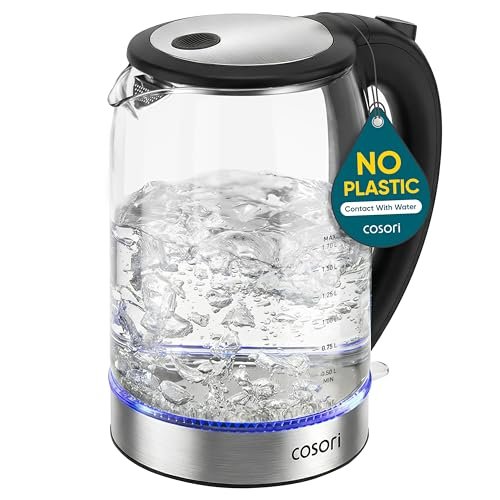
COSORI Electric Kettle (Black) – Buy on Amazon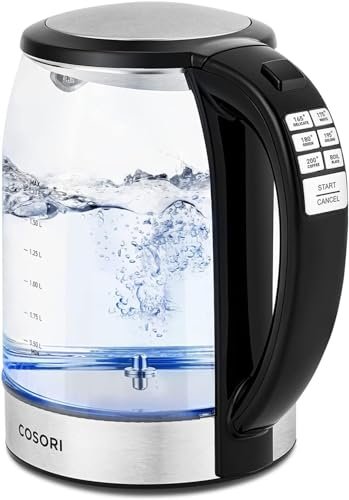
COSORI Electric Kettle with Temperature Control – Buy on Amazon
As an Amazon Associate, Trend Trolley earns from qualifying purchases.