
Winter announces itself in American homes in small, irritating ways. You wake up with a scratchy throat. Your lips crack no matter how much balm you use. You reach for a doorknob and get a static shock. The wooden floor you never thought about in July suddenly has thin gaps between the boards.
Most of that is dry indoor air, and most of it is fixable. A humidifier is one of the least glamorous winter gadgets you can buy — and one of the few that changes how a room actually feels, day after day. The catch is that buying the wrong one is easy: too small for the room, a nightmare to clean, or the wrong type for your household. A little homework before you buy saves you from a gadget that ends up in a closet by February.
Why winter air gets so dry
Cold outdoor air holds very little moisture to begin with. When that air comes inside and your furnace or heat pump warms it up, its relative humidity drops sharply — warm air can hold more moisture, so the same air feels much drier. That is why indoor humidity in a heated American home can fall to 15–20% in January, even while it is snowing outside.
Forced-air heating makes it worse, since it constantly circulates that dry air. Older homes with drafts bring in even more cold, dry air. The result is the classic winter list: dry skin, irritated sinuses, nosebleeds, static shocks, and wood furniture and floors shrinking slightly.
Do you actually need one?
Not every home does. If you live somewhere with mild winters, or your house naturally stays above 35% humidity, a humidifier is optional. The honest way to decide is a small hygrometer — the standalone kind costs around $10–15 and tells you the truth within a day. The range most health and building guidance points to is roughly 30–50% relative humidity indoors.
Below 30%, you will usually feel it: dry skin, a scratchy throat in the morning, more static. Above 50%, you are inviting condensation on windows and, over time, mold in cold corners. A hygrometer also stops you from guessing — and from running a humidifier in a room that does not need one.
The four types, honestly explained
Evaporative humidifiers use a fan to blow air through a wet wick or filter. They are the workhorses: they self-regulate to a degree, since drier air evaporates more water, and they rarely over-humidify a room. The trade-off is that the wick or filter needs replacing every month or two in hard-water areas, and the fan makes a low hum.
Ultrasonic cool-mist models use a vibrating diaphragm to make a fine mist. They are quiet — often the best pick for a bedroom — and use very little electricity. The downside: if your tap water is hard, they can leave a fine white mineral dust on nearby surfaces. Using distilled water or a demineralization cartridge fixes that, but it adds a small running cost.
Warm-mist humidifiers boil water and release warm steam. The heat kills most bacteria in the water, and the warm output can feel nice in a cold room. But they use noticeably more electricity, and the hot steam is a burn risk — not the best choice with small children or pets running around.
Whole-house humidifiers attach to your furnace and humidify the entire home. They are the most comfortable solution if you own your home and have forced-air heat, but they cost far more up front, need professional installation, and make no sense for renters.
For most people, the choice is really evaporative versus ultrasonic cool mist, with the bedroom usually going to ultrasonic for quiet and the living room often going to evaporative for steady output.
Sizing: the mistake almost everyone makes
The number that matters most is the room size the unit is rated for, in square feet — not the tank size. A unit rated for 300 square feet will run constantly in a 600-square-foot open living room and still leave the air feeling dry. Measure the room, then buy a unit rated for at least that size, ideally a little more.
Tank size decides how often you refill, not how well it humidifies. A small tank on a powerful unit means refilling twice a day in deep winter; a larger tank means once a day or less. If the unit will sit in a bedroom, check the runtime on low — you want it to last the night without a 3 a.m. refill run.
Features worth paying for — and ones to skip
A built-in humidistat is the one feature I would pay extra for: it turns the unit off when the room hits your target, so you do not over-humidify. Auto shut-off when the tank runs dry is standard on decent models and worth confirming. A wide tank opening, and a tank you can actually fit your hand into, makes cleaning dramatically easier — this matters more than it sounds.
Skip the rest unless you genuinely want it: colored mood lights, aroma trays, and app control are nice extras, not reasons to choose a model. A top-fill tank is genuinely convenient, though — filling from the top beats carrying a dripping tank to the sink.
Cleaning: the part nobody wants to hear
Here is the honest truth about humidifiers: they are only as healthy as your cleaning routine. Standing water grows mold and bacteria, and a dirty humidifier can push that into the air you are breathing. If you buy one, you are signing up for a quick daily rinse and a deeper clean about once a week — usually a vinegar soak for the tank and a wipe-down of the base.
This is where the model choice comes back around. A unit with a simple, wide-opening tank takes two minutes to clean. A unit with narrow corners and a dozen crevices takes ten and gets skipped — and skipped cleaning is how humidifiers end up in closets. If you know you will not clean weekly, buy the simplest design you can find, or skip the purchase.
Who should think twice
A humidifier is not right for every household. If your home already sits above 50% humidity, adding more invites condensation and mold. People with asthma or allergies should check with their doctor first — for some, extra moisture helps; for others, it feeds dust mites.
And if you have hard water, budget for distilled water or cartridges with an ultrasonic model, or pick evaporative instead. The white dust is harmless but annoying, and it settles on everything near the unit.
A quick checklist before you buy
- Measure your room and buy for that size, plus a little headroom.
- Pick evaporative for living rooms, ultrasonic for quiet bedrooms.
- Check the tank opening — if you cannot reach inside to clean it, walk away.
- Make sure it has a humidistat and auto shut-off.
- Budget for filters or distilled water if your water is hard.
A humidifier will not fix a drafty house or replace good insulation. Paired with the rest of your winter setup, though, it is one of the cheapest comfort upgrades of the season — and with a heated blanket on the coldest nights, the room stays comfortable without cranking the heat. If your mornings start with a dry throat and your skin feels like sandpaper by noon, a well-chosen one earns its place on the nightstand fast.
🛒 Shop This Guide – Buy on Amazon
Affiliate Disclosure: Trend Trolley is a participant in the Amazon Services LLC Associates Program. If you buy through a link on this page, we may earn a small commission at no extra cost to you. Prices and availability change often, so please check the current price on Amazon before you buy.
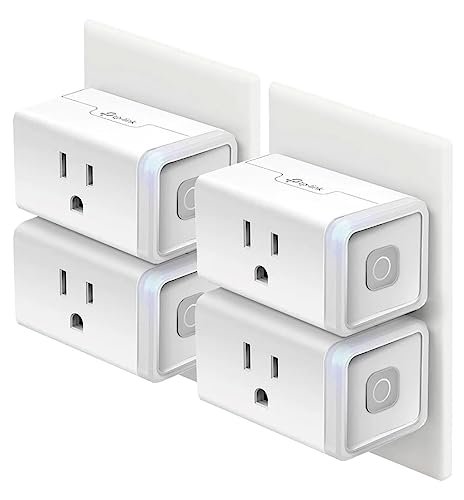
Kasa Smart Plug HS103P4 (4-pack) – a smart companion to schedule your humidifier – Buy on Amazon
Echo Dot 5th Gen – a smart companion for voice control of your humidifier setup – Buy on Amazon
As an Amazon Associate, Trend Trolley earns from qualifying purchases.